CirQl Media Magazine
Why your Meta ads die after two weeks
Creative fatigue isn't a mystery. It's a schedule you can plan for.

Most Meta campaigns don't fail at launch. They fail quietly, somewhere around week two, when the same three creatives keep chasing the same people. The audience hasn't gone anywhere. It has simply seen you enough. Brands react by raising the budget, changing the targeting or blaming the algorithm, when the real problem sits in the ad itself.
This is creative fatigue, and it's the most predictable thing in paid social. Once you treat it as a schedule instead of a surprise, your cost per result stops swinging every other week.
What creative fatigue actually is
Meta's delivery system shows your ad to the people most likely to act on it first. That's why week one often looks great. As those people convert or scroll past, the system has to work harder to find the next person, and the people who have already seen the ad start ignoring it. Frequency climbs, attention drops, and every result costs more.
Smaller audiences fatigue faster. A clinic targeting one area of Dubai or a brand selling to a narrow niche can hit this wall in days, not weeks.
How to spot creative fatigue early
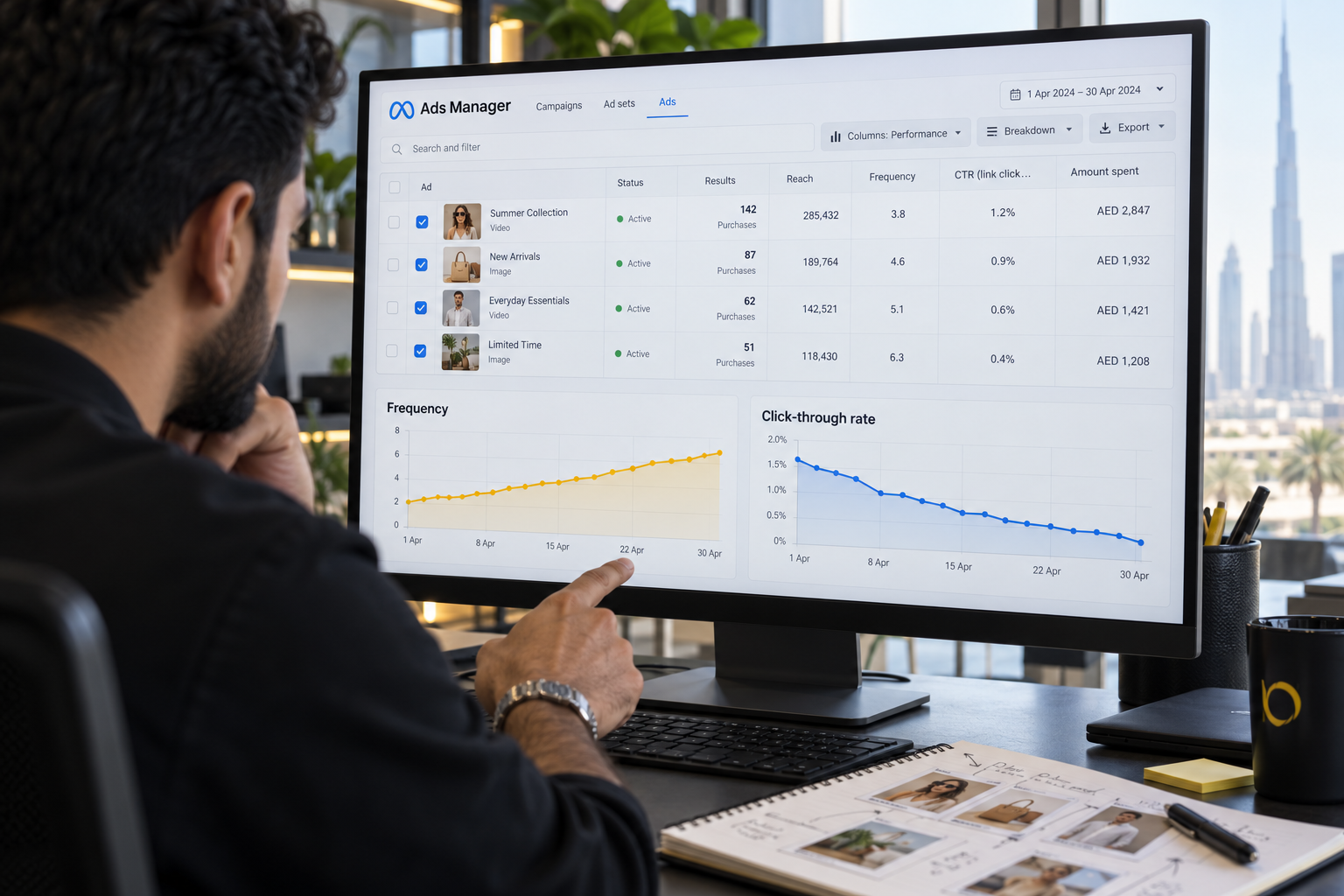
- Frequency rising week over week while reach flattens.
- Click-through rate (CTR) falling on the same ad.
- Cost per result climbing while the budget hasn't changed.
- Comments and reactions slowing down or repeating the same complaints.
When two or more of these move together, the creative is tired. Check at ad level, not campaign level, because one strong ad can hide three dying ones in the totals.
Why a bigger budget makes it worse
Pushing more money into a fatigued ad forces it in front of the same people faster. You pay more to show the same message to an audience that has already said no. Scaling only works when there's fresh creative ready to absorb the spend.
Budget scales reach. Only creative scales results.
Build a creative pipeline before you need it
The fix is a pipeline: new ads queued up and ready before the current ones bend. In practice that means three things.
New hooks, not just new colours
Changing the background colour of a tired ad rarely works. Change the first three seconds: a different opening line, a different face, a different problem. Keep the offer, change the way in.
New formats
Rotate between static, carousel, short video and creator-style content. People who skip one format often stop for another.
New angles
Speak to a different reason to buy: price, speed, status, trust, fear of missing out. Each angle reaches a slightly different person inside the same audience.
How we run it at CirQl
Our Ad Creative Lab plans creative in sprints. Every campaign launches with variants, we read the numbers weekly, and the next batch is already in production when the current one starts to slow. Media buying and creative sit at the same table, so the people writing the hooks see the same dashboard as the people spending the budget. See how it works on our Performance Marketing page, or browse our ad creative work.
Questions we get asked
How often should I refresh Meta ad creatives?
There's no fixed number. Watch frequency, click-through rate and cost per result at ad level, and have new creatives ready before those lines turn. Smaller audiences usually need fresh creative more often than broad ones.
Does Advantage+ creative stop creative fatigue?
It helps by testing small variations automatically, but it can't invent a new hook or angle. You still need genuinely new concepts in the pipeline.
Should I duplicate an ad that's fatigued?
Duplicating usually shows the same message to the same people. A new hook, format or angle works better than a copy.
Want this done for your brand?
We plan the creative before the numbers turn.